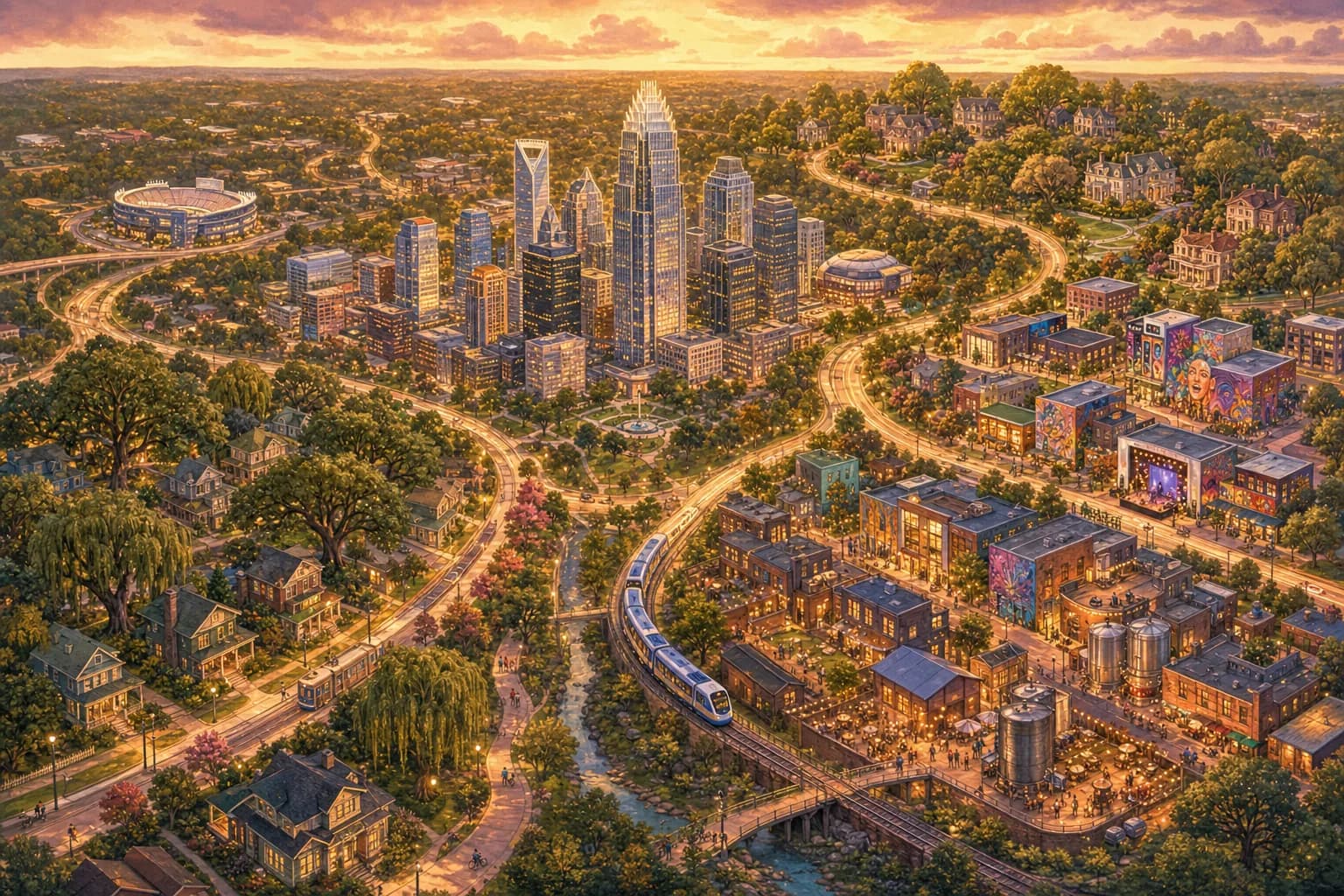
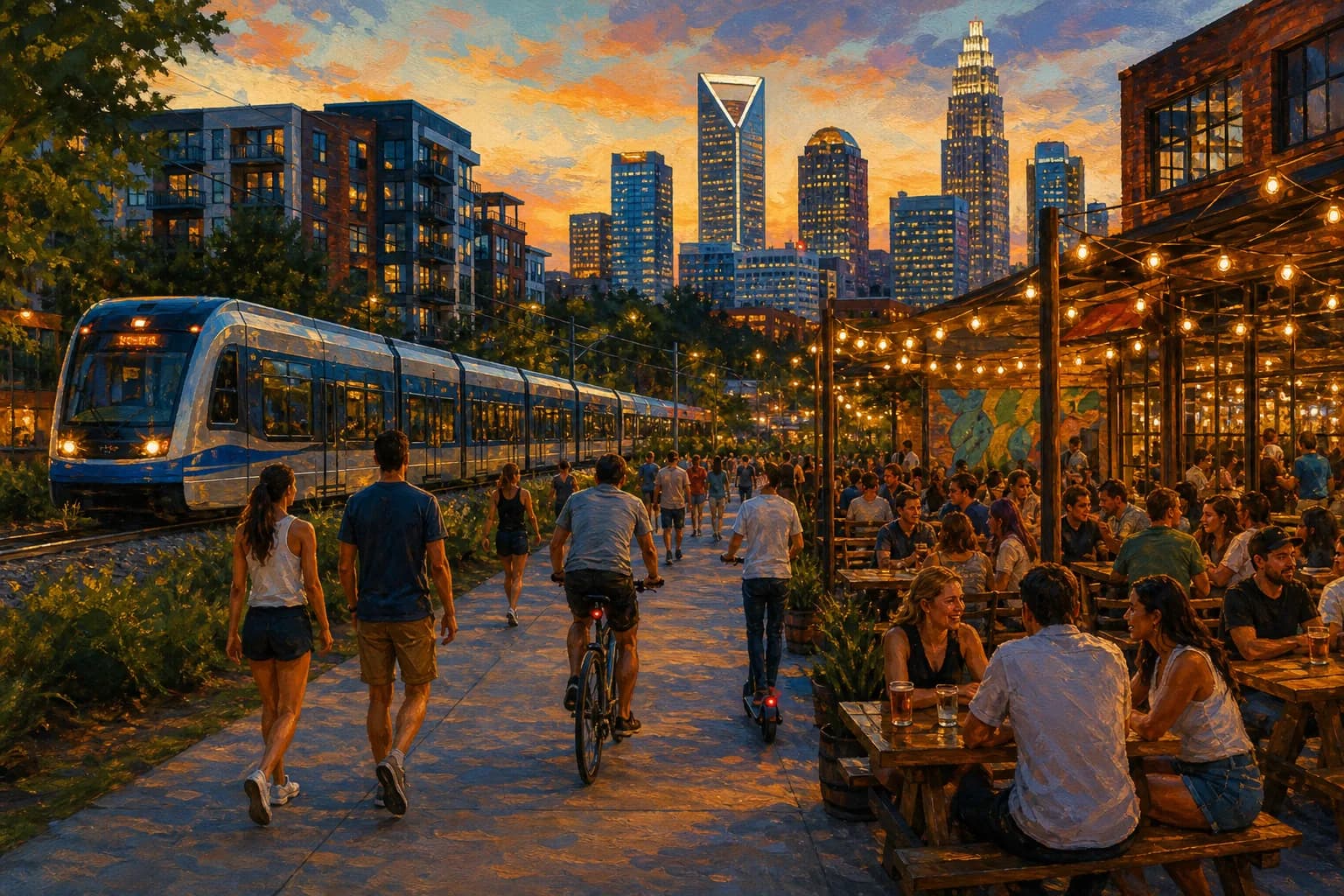
Dilworth — the original streetcar suburb, and the most complete neighborhood in Charlotte. Tree-cathedral streets of craftsman homes, the East Boulevard dining strip, Latta Park, a Walk Score of 78 (highest outside Uptown), and a Blue Line station on its edge. Average apartment rent about $2,121 — the price of having everything. Best for: established professionals and families who want walkability and a yard.
Myers Park — the grand one. Charlotte's most prestigious address: planned in the 1910s, giant willow oaks over estate homes, sale prices in the seven figures (on thin monthly volume — the tier is the fact, the exact median isn't). Apartment pockets average about $1,924. No rail, all charm. Best for: executives, forever-home buyers, oak-tunnel Sunday drivers.
SouthPark — retail-polished suburbia. Anchored by SouthPark Mall — the largest shopping center in the Carolinas and the biggest luxury retail destination between Atlanta and DC — with office towers, the in-progress three-mile SouthPark Loop path, and core-area rents around $2,192 (Barclay Downs). No rail; 15 minutes' drive to Uptown. Best for: families and executives who want suburban polish close-in.
Ballantyne — the master-planned edge. South Charlotte's 535-acre corporate park is mid-transformation ("Ballantyne Reimagined"): 1,200 new apartments, a 4,000-seat amphitheater, a stream park, and the 26-story Oro tower. Average rent about $1,852; a 20-minute I-485 drive to Uptown, no transit to speak of. Best for: families and corporate transferees working the south corridor who accept full car dependence.
University City — the college-anchored value play. The northeast district around UNC Charlotte holds the Blue Line's northern terminus, lakefront redevelopment at University Place, and the most affordable rail-served rents in the city — roughly $1,636–$1,920 depending on the pocket. Best for: students, university staff, and rail commuters optimizing rent.