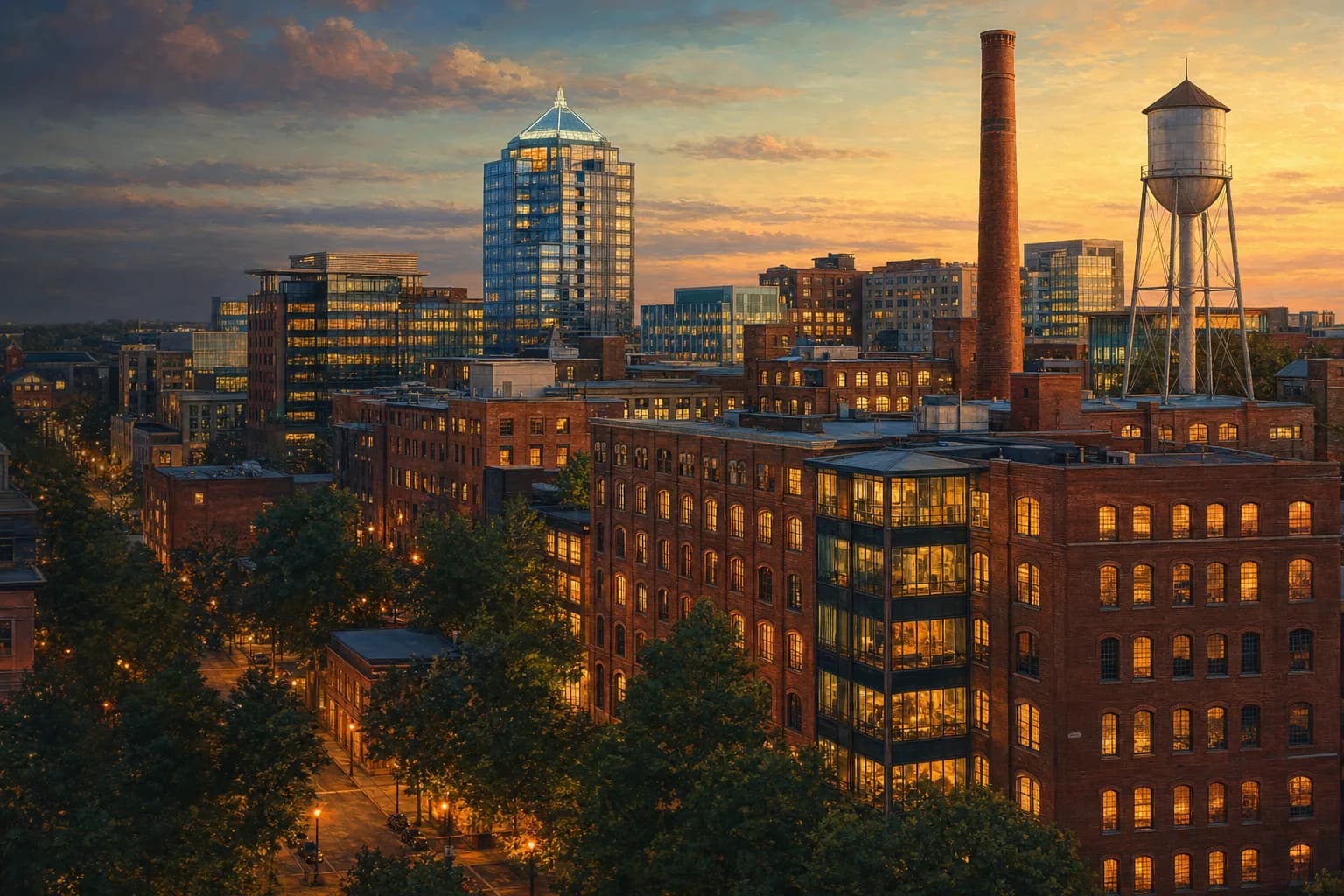
Illustrated map of Durham, North Carolina neighborhoods radiating from the downtown tobacco-warehouse skyline toward Duke Chapel and Research Triangle Park

Living here · Durham

The Best Neighborhoods in Durham, NC: A Local Operator’s 2026 Guide

Durham changes character every few blocks: a warehouse loft by the train station, a porch-lined mill village by Duke, a golf-course suburb on the Chapel Hill side. Here are the eleven areas worth your shortlist, with real rents, home values, Walk Scores and commute times.

Updated November 7, 2026 · by the Trifecta Corporate Housing team

How to read this guide

We operate furnished lofts in downtown Durham and spend a lot of time answering one question from guests who are relocating: where should we actually live? This list is built around what decides that question in Durham — which job center you are commuting to, whether you want to walk to things, and what you can spend. If you are visiting for a weekend or a hospital stay rather than moving, our where to stay in Durham guide is the better read.

A few keys before the list. Durham is a driving city with walkable pockets: the city's overall Walk Score is just 30, while the downtown warehouse blocks score in the 90s — that gap explains most of the choices below. Rents are RentCafe neighborhood averages updated October 30, 2026; RentCafe publishes figures only for some areas, so a dash in the table means no published average. Home values are Zillow's typical home value (September 2026) — a mid-range figure, not a listing price; most of these neighborhoods moved between about +1% and −4% over the past year. Drive times are light-traffic routing estimates from each neighborhood's center to Duke University Hospital and to Boxyard RTP in Research Triangle Park; rush hour adds time. Some Walk Scores are for a single representative address, and we say which.

92

Walk Score on our West Village block downtown — against 30 for the city overall

$1,552

Average Durham apartment rent (RentCafe, Oct 2026)

$385K

Typical Durham home value (Zillow, Sept 2026), down about 4% in a year

2 vs 10 mi

Downtown to Duke vs downtown to RTP — the commute split that shapes everything

The walkable core: downtown, American Tobacco and West Village/Brightleaf

Downtown / American Tobacco — the city's living room. The downtown core runs from City Center's restaurant-and-bar blocks south to the American Tobacco Campus, the restored factory complex beside DPAC and the 10,000-seat Durham Bulls Athletic Park, and north to Durham Central Park, home of the Saturday farmers' market. The Walk Score at American Tobacco is 88. RentCafe puts average rent at about $1,910 for downtown and $2,342 around Central Park. Golden Belt, a converted textile mill with artist studios, sits about a mile from the center of downtown. The honest trade: event nights bring crowds, and downtown is where Durham's nightlife lives — great to walk to, louder to sleep above. Best for: car-light renters, people who want shows, games and dinner on foot, and anyone whose job is downtown or at Duke (about six minutes' drive).

West Village / Brightleaf (the Warehouse District) — loft country. The west edge of downtown is a cluster of converted Liggett & Myers tobacco warehouses: Brightleaf Square's shops and restaurants (Walk Score 91), the West Village loft buildings (our block scores 92), and Durham's Amtrak station. It is the priciest rental district on RentCafe's Durham list at about $2,476, and Zillow's typical home value for its condos is about $442,000. Duke's hospital is roughly two miles west — about a five-minute drive — and RTP about 16 minutes. A few blocks west, the Burch Avenue neighborhood (Walk Score 70) is a residential alternative with the same short trip to Duke. Best for: loft lovers, train commuters to Raleigh or Charlotte, and anyone who wants downtown with a calmer evening soundtrack. (This is where our Durham lofts are.)

Historic and close to Duke: Trinity Park, Old West Durham/Ninth Street, Watts-Hillandale

Trinity Park — porches between downtown and Duke. About 40 square blocks of tree-lined streets between downtown and Duke's East Campus, on the National Register as the Trinity Historic District (751 contributing buildings, from the 1890s to 1960). Durham School of the Arts occupies the 1923 former Durham High School inside the neighborhood. It is a premium address: Zillow's typical value is about $649,000 (RentCafe publishes no rent average for it). Walkability depends on the block — an interior street scores 52, and from the middle of the neighborhood Ninth Street and Central Park are each a little over 20 minutes on foot. Duke Hospital is about six minutes by car. Best for: buyers who want a historic house and a short trip to both downtown and Duke.

Old West Durham / Ninth Street — the mill village by East Campus. This neighborhood grew up around the Erwin Cotton Mill, which opened in 1893, closed in 1986 and is now apartments and offices. Its streets of roughly 100-year-old mill houses feed into Ninth Street, a strip of independent shops and restaurants (The Regulator Bookshop has been there 45+ years) with a Whole Foods on nearby Broad Street. Walk Score on Ninth Street is 84; Duke's East Campus is a 12-minute walk, and Duke University Hospital is about a mile — roughly three minutes' drive. RentCafe average rent is about $2,141; Zillow's typical home value about $486,000. Expect student energy and neighborhood events like Porch Fest. Best for: Duke faculty, staff, residents and grad students who want to walk or bike to work.

Watts-Hillandale — old houses, more yard. A National Register district north of Ninth Street with 446 contributing buildings dating from after 1909, including Mission- and Colonial Revival homes. The former Watts Hospital campus at its edge has housed the NC School of Science and Mathematics since 1980, and Hillandale Golf Course is less than half a mile from the neighborhood's center. The neighborhood Walk Score is 55 — fine for a stroll, a car or bike for errands — and Zillow's typical value is about $526,000, roughly flat over the past year. Duke Hospital is about five minutes away; RTP is one of the longer drives on this list, about 20 minutes. Best for: families who want a character house and a short Duke commute.

North of downtown: Duke Park and Old North Durham

Duke Park — a neighborhood built around its park. A historic neighborhood on either side of Roxboro Road between Trinity Avenue and Club Boulevard, part of the North Durham-Duke Park National Register district (homes mostly from the 1890s to the 1930s). Life here centers on Duke Park itself, and the active neighborhood association has run events for more than two decades. The neighborhood Walk Score is 45, Zillow's typical home value about $473,000, and downtown's Central Park is about a 25-minute walk. Despite the name, Duke's campus is across town — about nine minutes to the hospital — while RTP is about 16. Best for: families who want a park-centered street life without paying Trinity Park prices.

Old North Durham — walk to the farmers' market. One of Durham's first established suburbs, with a small business district of its own, sitting just north of downtown — about a 16-minute walk to Durham Central Park. A representative address on North Mangum Street scores 73 on Walk Score. RentCafe's average rent is about $2,011, and Zillow's typical home value about $551,000. Duke Hospital is about eight minutes by car, RTP about 17. Best for: buyers who want an older house within walking distance of downtown's Saturday routine.

Leafy south and southwest: Forest Hills and Hope Valley

Forest Hills — Durham's first automobile suburb. Homes here were built roughly 1923–1955 around Forest Hills Park, and the neighborhood includes the original campus of Durham Academy. It is the most expensive area on this list by Zillow's measure — a typical value of about $710,000. The 22-mile American Tobacco Trail runs along its edge, and the American Tobacco Campus is about a 27-minute walk north. Walk Score near the park is 41: this is a car neighborhood with a trail at the door. Duke Hospital is about eight minutes away, RTP about 17. Best for: established families who want a classic close-in neighborhood and a trail for weekend runs.

Hope Valley — the country-club suburb between Durham and Chapel Hill. Created in 1925–26 as the first full-fledged country club community in Durham's suburbs, built around an 18-hole Donald Ross golf course and listed on the National Register in 2009. The Hope Valley name now also appears on several nearby southwest Durham subdivisions; Zillow's typical value for its "Hope Valley" area is about $476,000, down about 4% in a year. Walkability is minimal (a street near the club scores 6). What it buys you is position: about 14 minutes to Duke Hospital, about 16 to RTP and about 20 to UNC Medical Center in Chapel Hill. Best for: households with one job at Duke or UNC and another in RTP, golfers, and anyone who wants space over sidewalks.

South Durham and the RTP side: Woodcroft, Southpoint and RTP-adjacent options

Woodcroft — the value play with a trail through it. A south-Durham community of apartments and homes along Woodcroft Parkway, with its own shopping center, a swim and tennis club, GoDurham bus stops along the parkway, and the American Tobacco Trail running right alongside. It is the most affordable area on this list: RentCafe's average rent is about $1,164 and Zillow's typical home value about $355,000. The neighborhood Walk Score is 21, so plan on driving. The geography favors RTP — about ten minutes — over Duke, about 17. Best for: RTP commuters, first-time buyers and families who want space and a trail on a budget.

The Southpoint area — convenience central. The neighborhoods around The Streets at Southpoint (the indoor-outdoor mall that opened in 2002, with Nordstrom, Macy's, Belk and a 17-screen AMC) sit near I-40 between NC 54 and Fayetteville Road. That makes it the best-connected spot on this list for multi-direction commutes: about 11 minutes to RTP, 17 to UNC Medical Center and 20 to RDU, but about 21 to Duke Hospital. The mall address itself scores 56 on Walk Score; plan on a car for everything else. RentCafe does not publish a single Southpoint average. Best for: RTP and Chapel Hill commuters, two-job households, and people who prize errands-in-one-stop over neighborhood character.

RTP-adjacent options. If your job is in Research Triangle Park — 55,000+ employees and 385+ companies — you can live almost inside it: Hub RTP, the park's "downtown," includes apartments alongside shops, and RentCafe's average for the RTP area is about $1,603. Just across the county line, Morrisville in Wake County (next to RDU) is the other common choice — Zillow puts typical rent there around $1,650 and home values around $472,000. Remember that schools and taxes follow the county: a Wake County address means Wake County schools, not Durham Public Schools. Durham's city limits themselves extend into Wake and Orange counties, so check the county on any listing. For the Raleigh-side comparison, see Raleigh vs Durham.

The cheat sheet: all eleven, one table

Durham neighborhoods at a glance (rent: RentCafe averages, Oct 2026; home value: Zillow typical value, Sept 2026; Walk Score: walkscore.com — * = single representative address; drive times: light-traffic estimates)
NeighborhoodAvg rentTypical home valueWalk ScoreDrive to Duke Hosp. / RTPBest for
Downtown / American Tobacco$1,910 (Central Park $2,342)—88*~6 / ~15 minCar-light renters, shows & games
West Village / Brightleaf$2,476$442K (condos)91–92*~5 / ~16 minLofts, train commuters
Trinity Park—$649K52*~6 / ~18 minHistoric homes between downtown and Duke
Old West Durham / Ninth St$2,141$486K84*~3 / ~17 minWalk or bike to Duke
Watts-Hillandale—$526K55~5 / ~20 minFamilies near Duke
Duke Park—$473K45~9 / ~16 minPark-centered family life
Old North Durham$2,011$551K73*~8 / ~17 minWalk to Central Park
Forest Hills—$710K41*~8 / ~17 minEstablished families, trail access
Hope Valley—$476K6*~14 / ~16 minSpace, golf, Duke/UNC + RTP households
Woodcroft$1,164$355K21~17 / ~10 minValue, RTP commuters
Southpoint area——56* (mall)~21 / ~11 minMulti-direction commuters

For families: the real trade in Durham is house-and-yard versus walkability. Close in, Duke Park, Watts-Hillandale and Forest Hills offer older single-family streets with parks and short drives to Duke; further out, Hope Valley and Woodcroft offer more space, with Woodcroft the budget pick. Whatever you shortlist, school assignment in Durham Public Schools is by address — run every specific house through the DPS School Locator before you get attached — and the district's magnet lottery opens each January for the following school year. Our moving to Durham guide walks through enrollment step by step.

On safety: people ask us which neighborhoods are "safe," and the honest answer is that Durham's crime picture is block-by-block rather than neighborhood-by-neighborhood — citywide numbers fold in a handful of high-incident corridors. Walk any street you are considering at night and on a weekend before you sign. Our Durham pros and cons guide lays out the citywide numbers, good and bad.

How to actually choose (the month-long method)

Durham rewards scouting more than most cities, because its reputation lags its reality in both directions and its blocks change fast. Listing photos will not tell you that Ninth Street is a five-minute walk from one house and a 25-minute walk from the "same neighborhood" a few streets over, or that the drive from Hope Valley to RTP is easy at noon and different at 8 a.m.

The method that works: base yourself centrally for a month, then test. Do the Duke or RTP commute at real rush hour from two or three candidate areas. Eat a weeknight dinner on Ninth Street and spend a Saturday morning at the Central Park farmers' market. Walk Duke Park and Trinity Park after dark. Run a stretch of the American Tobacco Trail from Woodcroft or Forest Hills. Then sign a lease or make an offer knowing exactly what you are buying.

Our furnished lofts are set up for exactly that month. They are two-bedroom lofts in two historic West Village warehouse buildings downtown — sleeping up to six, with full kitchens, Wi-Fi included and a paid washer and dryer in the building — about two miles from Duke and within roughly a 20-minute drive of every neighborhood on this list. Browse live availability for our corporate housing in Durham, see our furnished apartments in Durham, or look at monthly rentals in Durham. If you already know your neighborhood, though, skip us and sign there directly — the month only pays off if you are still choosing.

Scout all eleven from one furnished base

A month in a downtown West Village loft — two bedrooms, full kitchen, Wi-Fi — while you test commutes and walk the neighborhoods. Book direct with the local team that operates it: no middleman markup.

Good to know

Frequently asked questions

What are the best neighborhoods in Durham, NC?

For walkability: downtown, West Village/Brightleaf and Old West Durham/Ninth Street. For historic homes close to Duke: Trinity Park, Watts-Hillandale and Old North Durham. For families who want parks and yards: Duke Park, Forest Hills and Hope Valley. For value and an easy RTP commute: Woodcroft and the Southpoint area. The right answer depends mostly on whether you commute to Duke (about two miles west of downtown) or RTP (about ten miles southeast).

What are the best neighborhoods in Durham for families?

Close in, Duke Park, Watts-Hillandale and Forest Hills offer older single-family homes, parks and short drives to Duke. Further out, Hope Valley offers larger lots between Durham and Chapel Hill, and Woodcroft is the budget pick, with a typical home value around $355,000 (Zillow, Sept 2026), a swim and tennis club and the American Tobacco Trail alongside. School assignment is by address, so check every house with the Durham Public Schools School Locator.

Where should I live in Durham if I work at Duke?

Old West Durham/Ninth Street is the closest — about a mile from Duke University Hospital and a 12-minute walk to East Campus. Trinity Park, Watts-Hillandale and the West Village/Brightleaf end of downtown are all roughly five to six minutes away by car in light traffic.

Where should I live in Durham if I work in RTP?

South Durham. Woodcroft is about ten minutes from RTP in light traffic and the Southpoint area about 11, and Hub RTP has apartments inside the park itself. Morrisville, just over the line in Wake County, is the other common choice — but a Wake address means Wake County schools and taxes.

What is the most walkable neighborhood in Durham?

The downtown warehouse district: our West Village block scores 92 on Walk Score and Brightleaf Square 91, with American Tobacco at 88 and Ninth Street at 84. The city overall scores just 30, so walkable Durham really means downtown and the Ninth Street area.

What is the most affordable nice neighborhood in Durham?

Among the areas in this guide, Woodcroft: RentCafe’s average rent there is about $1,164 (October 2026) versus $1,552 citywide, and Zillow’s typical home value is about $355,000 versus about $385,000 for Durham overall. You trade walkability (Walk Score 21) for space, a trail and a short RTP commute.

Is downtown Durham a good place to live?

For car-light renters, yes: it is the part of the city where shows, games, a grocery co-op, the farmers’ market and the Amtrak station are all walkable, and Duke is about two miles away. The trade-offs are some of the highest rents in the city (about $1,910–$2,476 on RentCafe, depending on the district) and event-night crowds and noise.

Your stay

Find your Durham neighborhood from a downtown base.

Two-bedroom West Village lofts with full kitchens and Wi-Fi, about two miles from Duke — the scouting headquarters for every neighborhood on this list. Booked direct with the local operator.