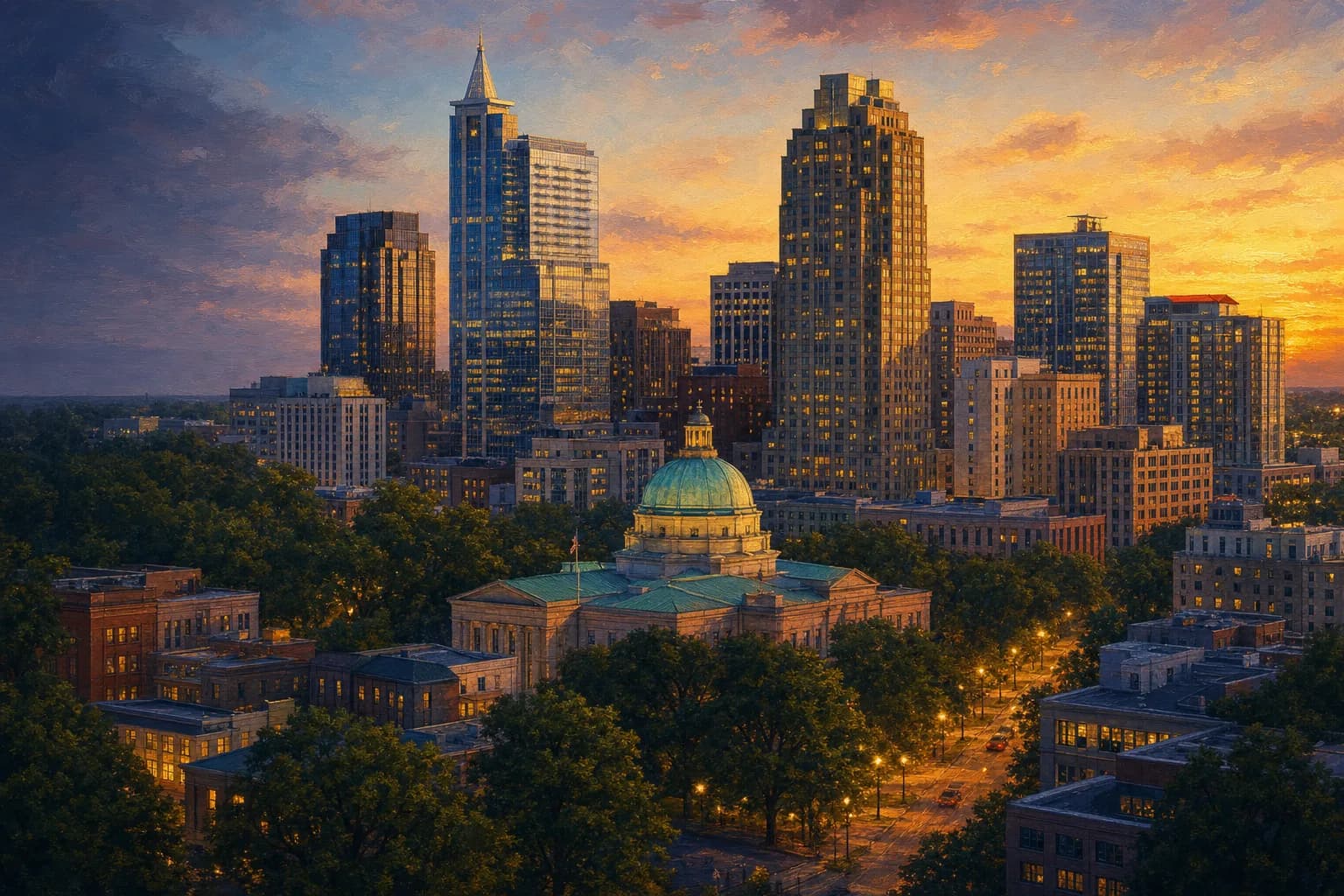
Downtown Raleigh, district by district (where we operate). The Downtown Raleigh Alliance divides the center into five districts. They’re a few minutes apart on foot, but each one does a different job:
- Glenwood South — Raleigh’s entertainment district, one of the largest in North Carolina: a strip of restaurants, bars, coffee shops and dance spots along Glenwood Avenue on downtown’s northwest side. The best pick if your trip is about eating and going out. Tradeoff: it’s the loudest part of downtown on weekend nights, and street parking is scarce then.
- The Warehouse District — repurposed brick warehouses, galleries and restaurants on the west side, home to Raleigh Union Station (Amtrak) and The Dillon, which is anchored by a Weaver Street Market co-op grocery. Our building, 400H, sits at the crossroads of the Warehouse District, Glenwood South and the Capital District. Tradeoff: limited street parking, and nearby decks fill on event nights.
- Fayetteville Street and the Capital District — downtown’s main street and government core: office towers, the State Capitol, the free NC Museum of Natural Sciences, and at the south end the Raleigh Convention Center and the Martin Marietta Center for the Performing Arts. The natural base for a conference or a museum weekend. Tradeoff: parking is mostly in paid decks during the day (participating city decks are free nights and weekends).
- Moore Square — the east side of the core, built around one of two surviving four-acre parks from Raleigh’s original 1792 plan, with City Market and Marbles Kids Museum alongside. A good stop with kids. Tradeoff: it’s the far side of downtown from Glenwood South and Union Station, so it’s a walk to the west-side restaurants.
North Hills (Midtown) — the polished north-side option. A mixed-use district at the Six Forks Road exit of the I-440 Beltline, redeveloped from a 1960 mall and officially opened in 2004 — its developer’s pitch was “Raleigh’s new midtown.” It has hotels (a Renaissance and an AC Hotel), a Harris Teeter, Target, a cinema, and lots of restaurants and shops in walkable blocks. Tradeoff: walkable inside its own blocks, but you’ll drive to downtown, NC State or the arena. It suits a longer stay with a car and a preference for newer, calmer surroundings.
The Village District (formerly Cameron Village) — the old-school neighborhood center. Opened in 1949 as Cameron Village and renamed the Village District in 2021, it’s a shopping-and-dining district about two miles west of downtown, between downtown and NC State. Tradeoff: it’s a shopping district first — pleasant and residential, handy for a campus visit, but you’ll drive or ride downtown for nightlife and events.
Hillsborough Street / NC State — the campus corridor. Restaurants and bars line Hillsborough Street along NC State, home to about 39,000 students. The obvious base for a campus tour, move-in or graduation. Tradeoff: on football Saturdays, move-in weekends and graduation weekends, rooms near campus book out and parking gets tough. Downtown is only a 7–10 minute drive straight down Hillsborough Street, so it’s a realistic alternative for those weekends.
West Raleigh by Lenovo Center and Carter-Finley — the game-day zone. Lenovo Center (renamed from PNC Arena in 2024, home of the Hurricanes and NC State men’s basketball), Carter-Finley Stadium (56,919 seats for Wolfpack football) and the State Fairgrounds share one complex about five or six miles west of downtown, with a ring of chain hotels — the Four Points by Sheraton Raleigh Arena is listed by the arena as within walking distance. Tradeoff: walking to the game is great, but there’s nothing else to walk to, and the lots empty slowly after big events.
Near RDU and Brier Creek — the airport edge. RDU is about 13 miles northwest of downtown, and Glenwood Avenue runs all the way out to the Brier Creek shopping area near the airport, where Visit Raleigh groups its own cluster of hotels. It’s also close to Research Triangle Park and Morrisville. Tradeoff: car-dependent and mostly chain hotels and shopping centers. Downtown is only about 20 minutes from the terminal, so the airport area wins mainly for very early flights or a daily commute to RTP.
Cary — the big suburb next door. Raleigh’s western neighbor is a town of about 184,000 people with its own downtown, its own Amtrak station and easy access to RTP. It’s a strong choice if you’re visiting family in western Wake County or working in Cary, Morrisville or RTP. Tradeoff: it’s suburban, and you’ll drive into Raleigh for most games, shows and nights out.