
We run furnished apartments in downtown Durham and host incoming students, visiting scholars and their families. We have no connection to Duke or Fuqua. For anything official (housing applications, deadlines, orientation), Duke’s own pages are the source, and we link to them below.
The quick facts
| Where Fuqua is | 100 Fuqua Drive, on Duke’s West Campus |
| Daytime MBA length | 22 months, starting in August |
| Class of 2028 orientation | July 29–31, 2026, with classes from August 3 |
| Duke grad housing | Limited: 300 Swift on campus, and Lancaster Commons off campus (the only Duke option for students living with family) |
| Where most classmates look | Ninth Street, Old West Durham, Downtown and the Erwin Road / LaSalle Street area |
| Durham’s size | About 296,000 people in the city, and well over 2 million across the Raleigh–Durham region |
| Airport | RDU, about 16 miles from Duke, roughly 20–30 minutes by car |
| Buses | Duke Transit is free on campus; GoDurham city buses are fare-free through June 2027 |
Who’s writing this
Where Fuqua students actually live
Duke’s graduate housing is limited, so most incoming MBAs end up renting near West Campus. In a 2023 housing guide put together by Fuqua students, Ninth Street was the most common choice (45% of the students who answered), followed by Old West Durham, Downtown and the Erwin Road / LaSalle Street corridor. Students’ blogs since then tell the same story, with some classmates choosing Southpoint for newer, cheaper apartments, or Chapel Hill when a partner works there.
| Area | Distance to Fuqua | Why people pick it | Trade-off |
|---|---|---|---|
| Ninth Street / Erwin Road | Walk or a short bike ride | Closest to campus, cafés and a Whole Foods nearby, and lots of classmates on the same block | Busy, and the newest buildings fill early |
| Old West Durham | About a mile, bikeable | Quieter streets and older houses split into apartments, between campus and downtown | Older stock, so check the heating and cooling |
| South LaSalle Street | Short drive or the bus | Big apartment complexes popular with grad students, often cheaper per bedroom | More car-dependent and less charming |
| Downtown Durham | About 2 miles: a 10-minute drive, a bus or a bike ride | Restaurants, bars, the Bulls ballpark, DPAC and the Amtrak station on foot. Best for partners who work in town | You commute to class instead of walking |
| Southpoint / South Durham | About 15–20 minutes by car | Newer apartments, more space for the money, near the big mall and I-40 to RTP | You need a car |
| Chapel Hill | About 20–25 minutes by car | Works if a partner is at UNC, with the Robertson Express bus between the campuses during term | Further from Fuqua’s social life |
Duke runs an off-campus housing listing site for students (offcampushousing.students.duke.edu), and second-year students often hand their leases to incoming first-years. Our best neighborhoods in Durham guide covers each area in more depth.
Duke’s graduate and family housing
Duke has two main options for graduate and professional students. Both are limited, and you have to be fully admitted before you can apply:
- 300 Swift is on campus: furnished two-bedroom apartments for graduate students. It isn’t available to students living with a family member.
- Lancaster Commons is off campus, about 2.6 miles from West Campus: unfurnished one-, two- and three-bedroom apartments at subsidized rents, with priority for master’s students with significant financial need. It’s the only Duke housing option for students living with a spouse, partner, child or other family member.
Married, with a partner or with kids? Apply to Lancaster Commons early if you qualify. Otherwise, plan on renting off campus like most of your classmates. Two-bedroom apartments in Old West Durham, off LaSalle or in South Durham are where families most often land, for the space and the price.
The application details change year to year, so check Duke’s graduate and professional housing pages before you plan around any of this.
Living alone or with roommates?
Both are common, and nobody publishes a split. What we see and hear from students:
- Single students who want to walk to class often take a one-bedroom or studio near Ninth Street, or share a two-bedroom with a classmate to cut the rent.
- Roommates usually come from your own class. Incoming students match up in admitted-student group chats in the spring, so wait until you’ve met people before signing a lease with strangers.
- Living alone downtown is popular with students who want a life outside school and don’t mind a short commute.
The real deadline is the lease market: apartments near campus turn over in the summer, and the best ones go early. If you’re arriving from abroad or can’t visit first, a few furnished weeks in Durham let you see apartments in person before you commit to a 12-month lease.
Coming with a partner or spouse
Fuqua has a real partner community, and it’s one of the things students mention most. Fuqua Partners is run by volunteer partners of Daytime MBA students. It starts with a month-long orientation full of daily events, then keeps going with weekly lunches, field trips, coffee meet-ups and free summer movies. There’s also a LASA Partners group for Latin American partners.
For international spouses and partners, Duke’s International House has run an International Spouses and Partners Program and an English Conversation Club. Check what’s on the schedule when you arrive, since programs change from year to year.
If your partner doesn’t speak much English, Durham is manageable but not effortless. Day-to-day life here assumes a car and English. What helps most is community: Duke’s Chinese Students and Scholars Association (DCSSA) is active, and Mandarin-speaking families often shop at Li Ming’s Global Mart on Westgate Drive in Durham. Living close to campus or downtown also matters. A partner who can walk to cafés, the library and the bus has a much easier first year than one alone in a car-dependent complex.
If your partner is job-hunting, look at Research Triangle Park, Duke Health, Raleigh and Chapel Hill. Where you live should split the difference between Fuqua and their commute.
Do you need a car?
For class, no. For life, it depends where you live.
- On campus and near campus, Duke Transit buses are free, and the C1 East-West route runs frequently between campuses until after midnight on weekdays. Ninth Street and Erwin Road are walkable to Fuqua.
- Around town, GoDurham city buses are fare-free through June 2027, and routes run between downtown and the Duke area.
- Between Duke and UNC, the Robertson Express bus runs while classes are in session.
- Where a car earns its keep: big grocery runs, Southpoint, trips to RTP or Raleigh, weekend hikes, and recruiting trips. A Duke graduate student parking permit for 2026–27 is $291 for the year.
Plenty of students manage the first year without a car and rent one, or use rideshare, for the odd trip. If you live off LaSalle, in South Durham or in Chapel Hill, plan on a car. Our Durham without a car guide has the routes, the airport options and where to buy groceries on foot.
Is Durham welcoming and diverse?
Durham is one of the more diverse cities in the South. Census estimates put the city at about a third Black, around 15% Hispanic or Latino and around 6% Asian, and its history includes Black Wall Street, the Parrish Street business district that made Durham a center of Black enterprise in the early 1900s. It’s a university and hospital town, so you’ll meet people from everywhere.
We can’t speak for anyone’s individual experience, and you shouldn’t take a housing company’s word for it. The best way to find out is to ask current students who share your background. Fuqua’s admissions office and its student clubs are the place to start, and two or three honest conversations will tell you more than any website.
Safety and choosing a block
Like any city, Durham varies block by block, and the areas students favor near campus and downtown are busy, well-lit and full of other residents. Rather than trusting a ranking, look up the specific address. The City of Durham publishes a crime lookup and links to a community crime map on its website. Then walk the block once in the evening before you sign a lease. Ask the landlord about secure entry and parking too.
Your first weeks: arriving before your lease starts
The most common gap we see: orientation starts in late July, the lease you want starts on August 1 or later, and you need somewhere to land, see apartments in person, or wait for your furniture. International students often arrive weeks early to set up a bank account, a phone and a Social Security appointment.
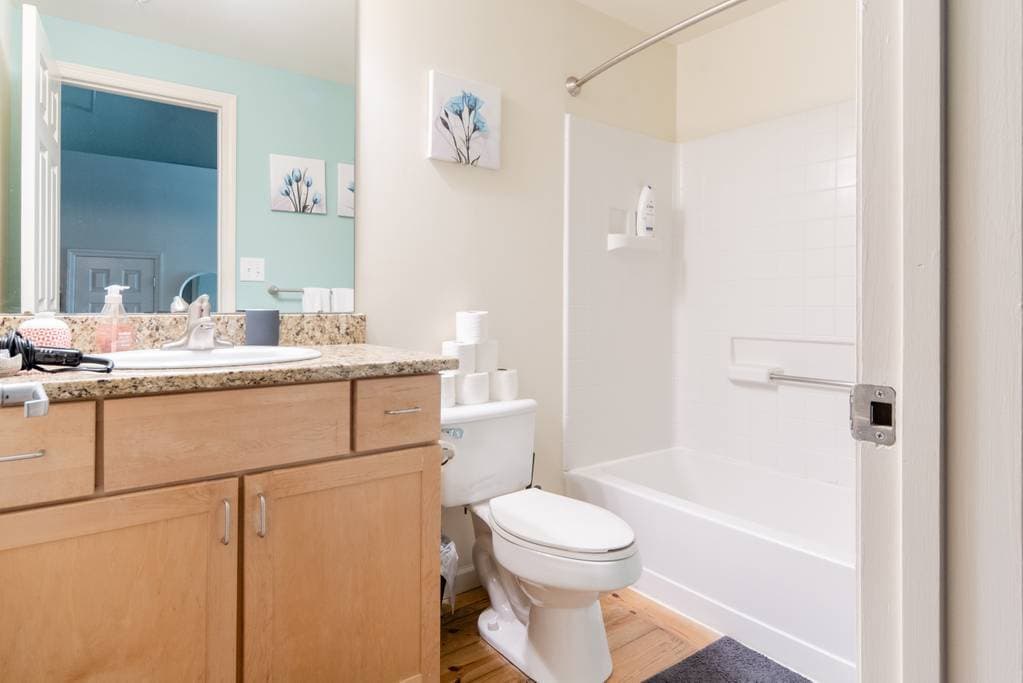
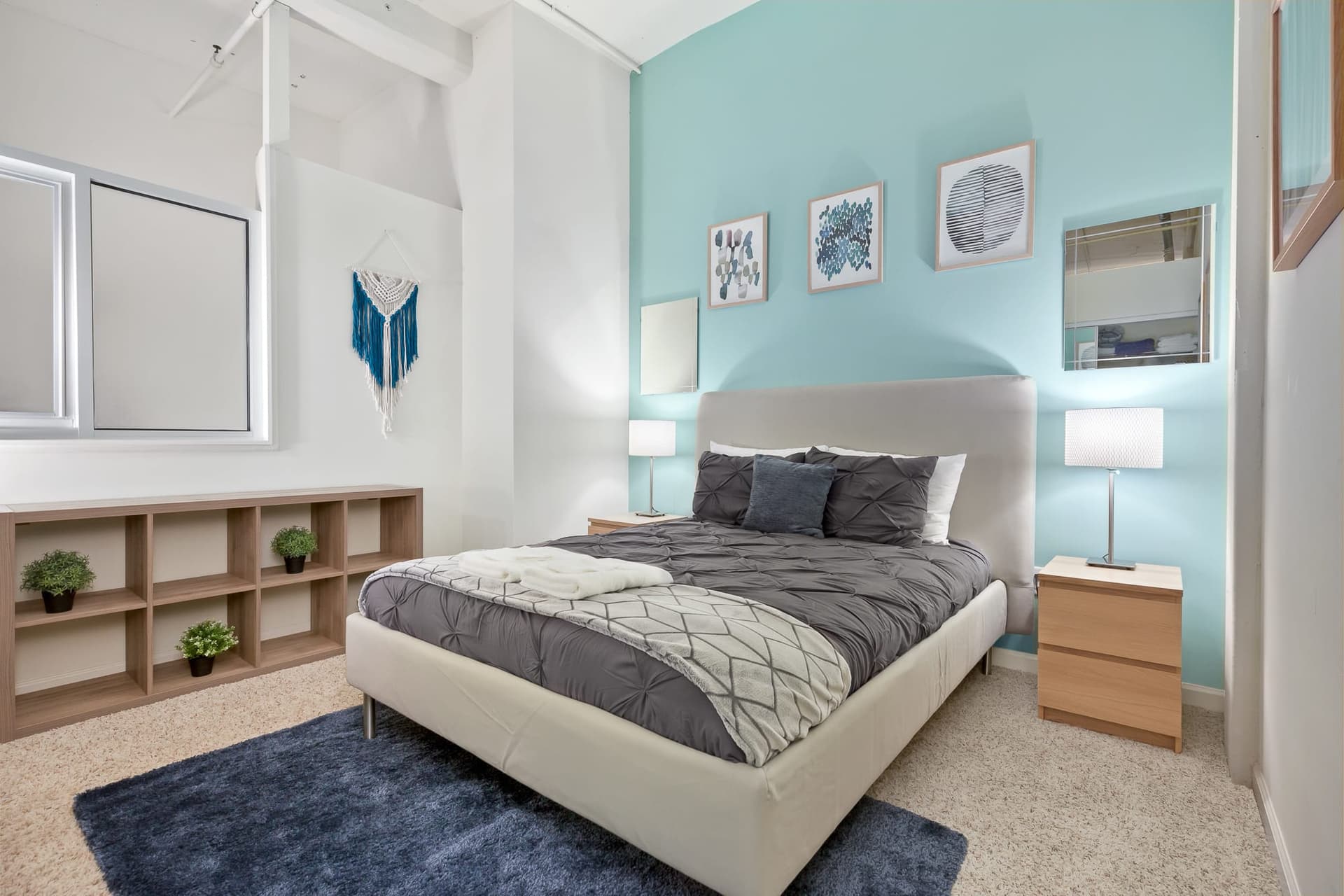
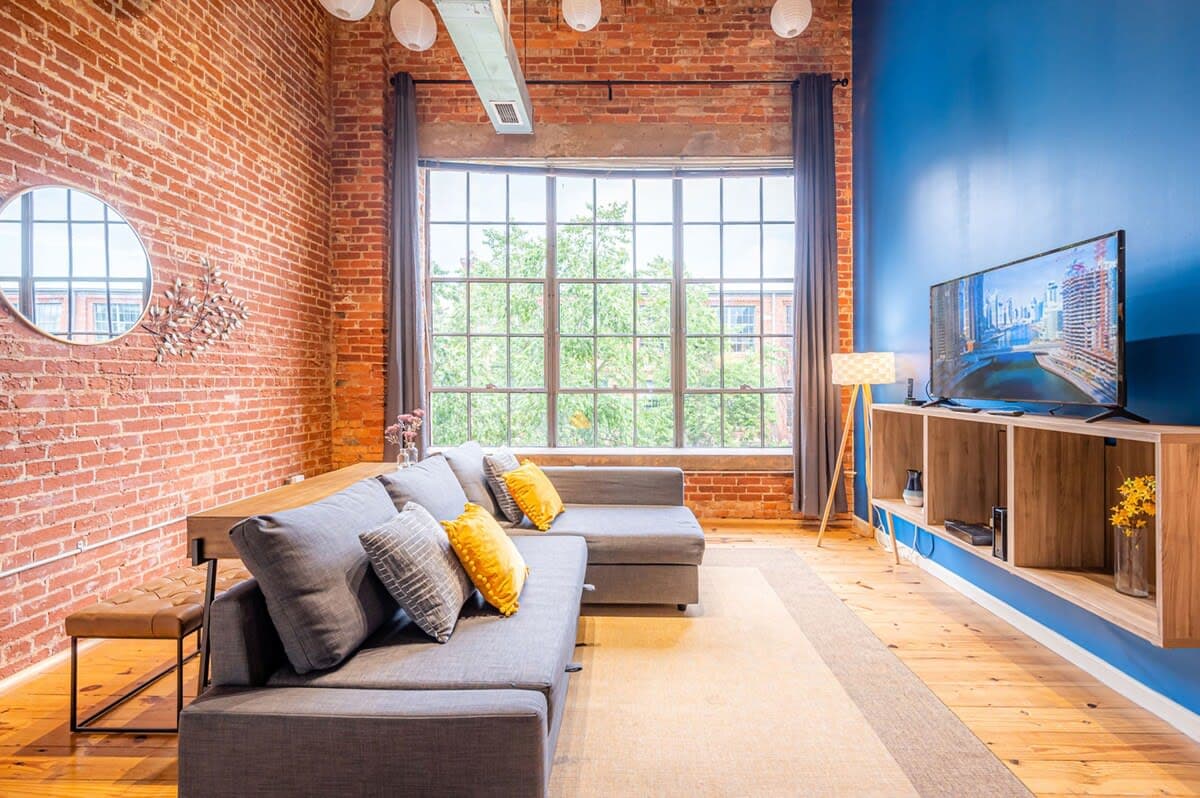
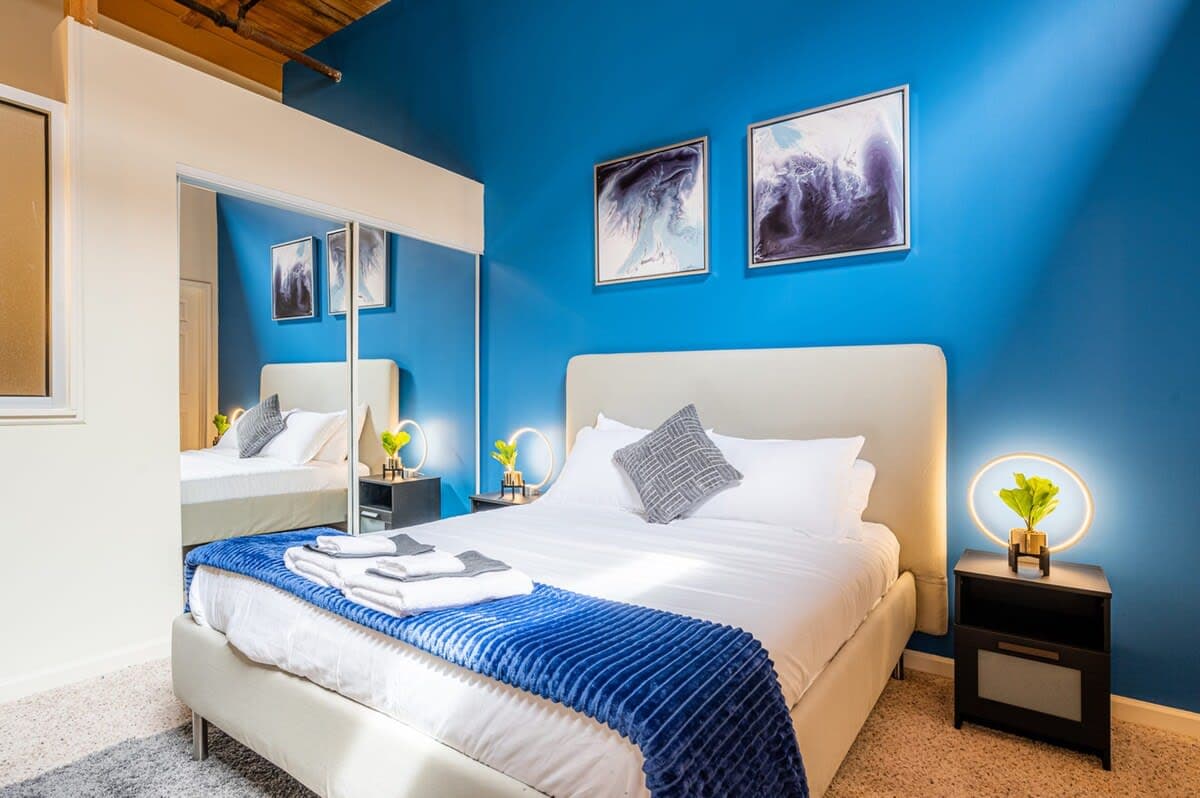
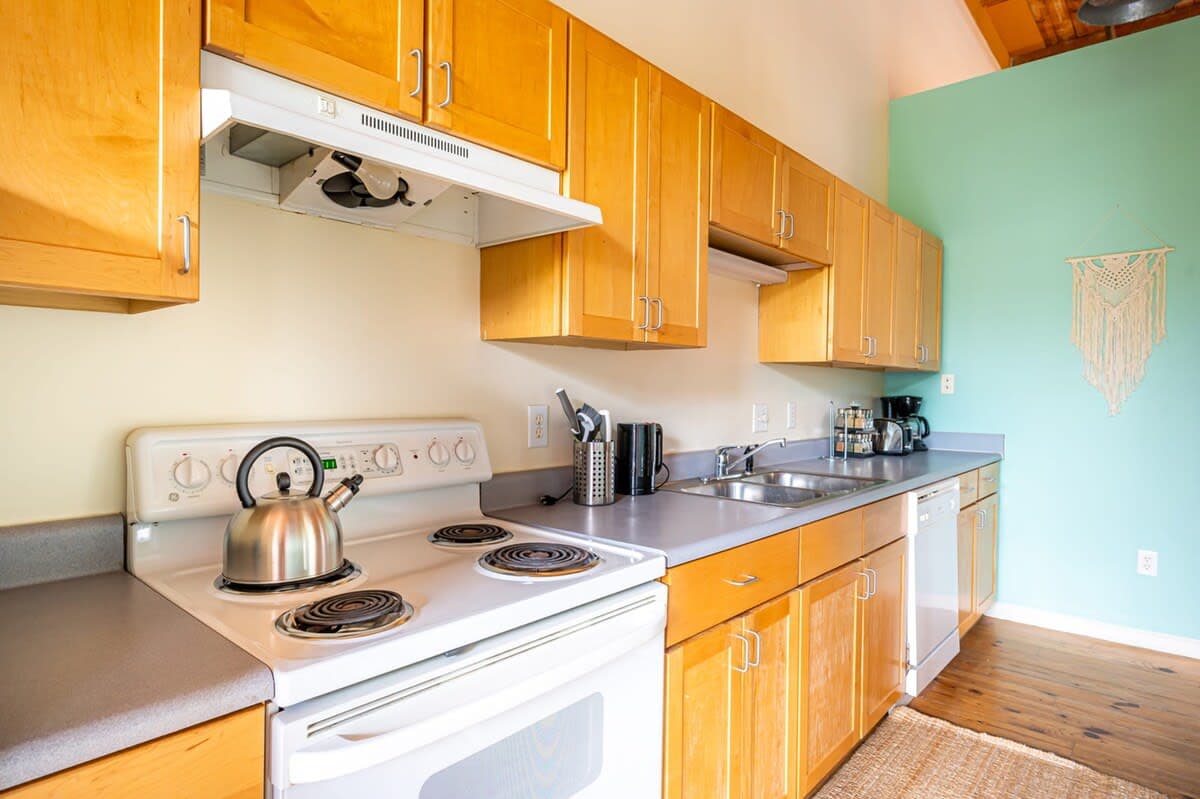
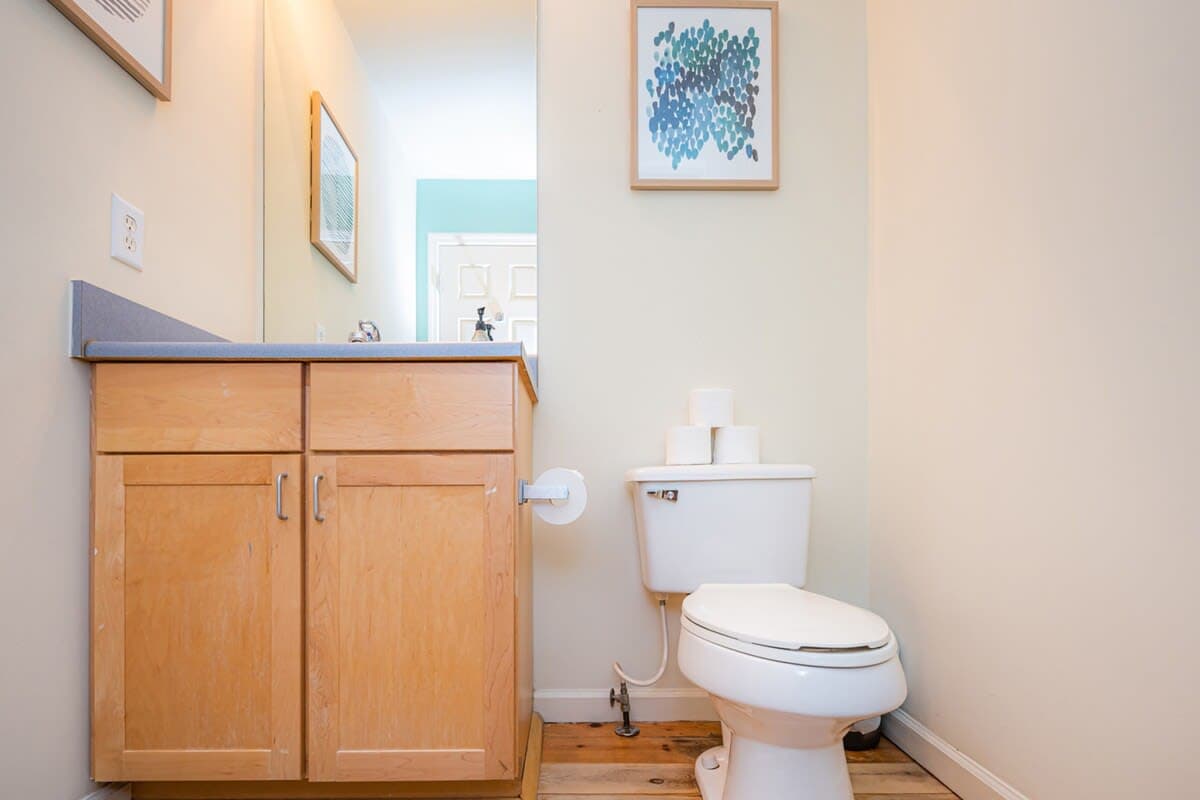
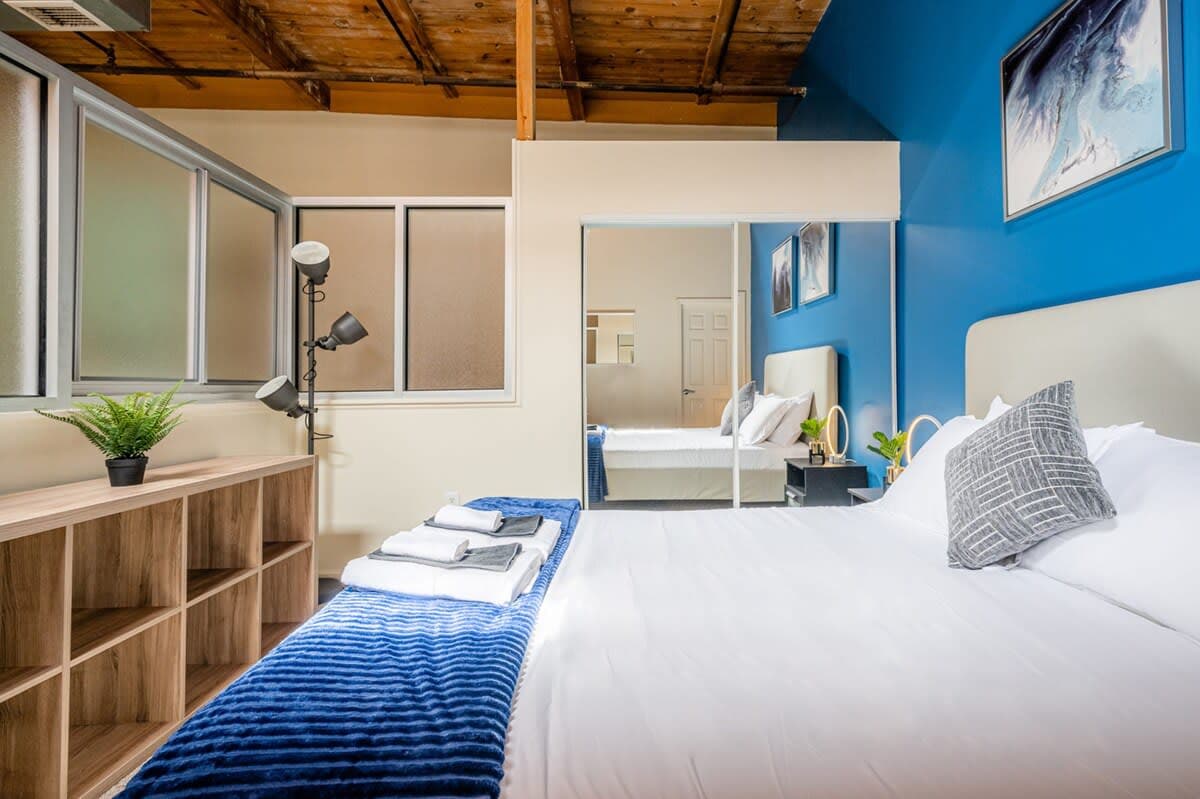
Our eight furnished lofts in downtown Durham’s West Village are about 2 miles from West Campus, and the Amtrak station is inside the complex. Each loft is a two-bedroom that sleeps six, so a couple, a family or two classmates can share. They come with a full kitchen, linens and Wi-Fi, laundry in the building down the hall, and parking, and they take pets. Book by the night, week or month, with no lease.
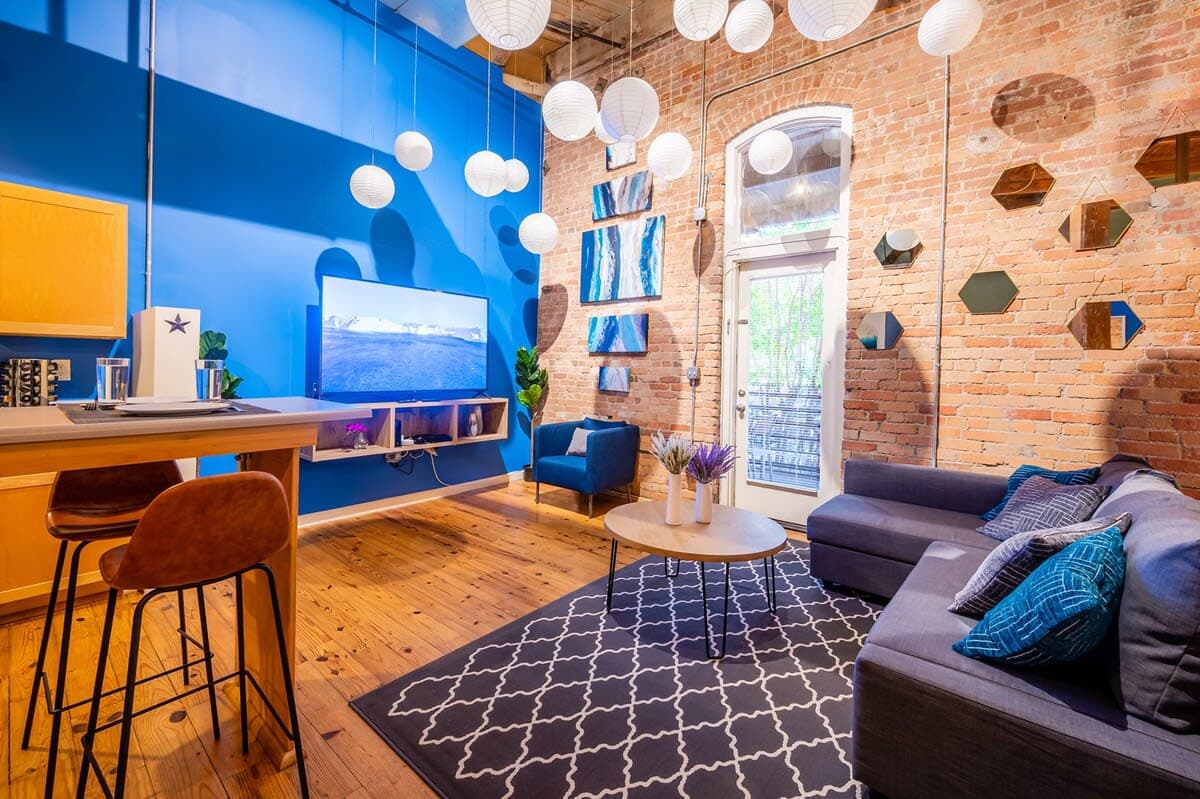
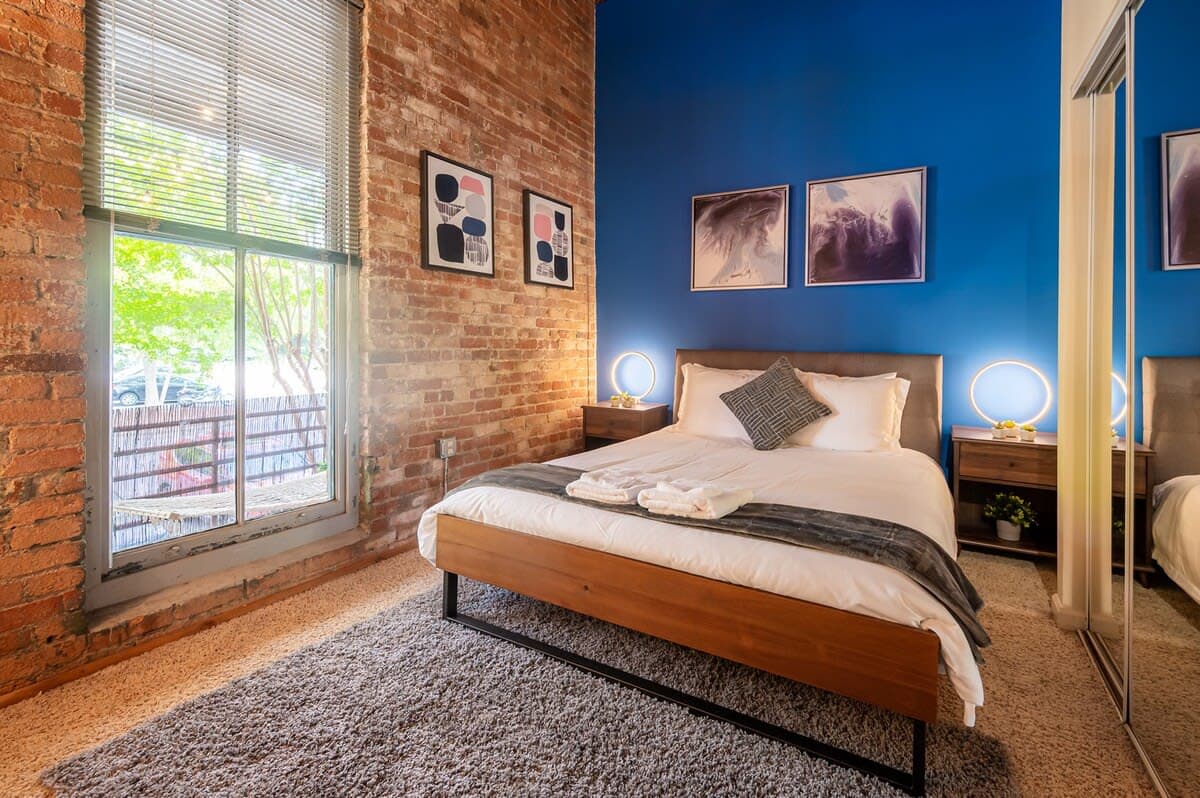
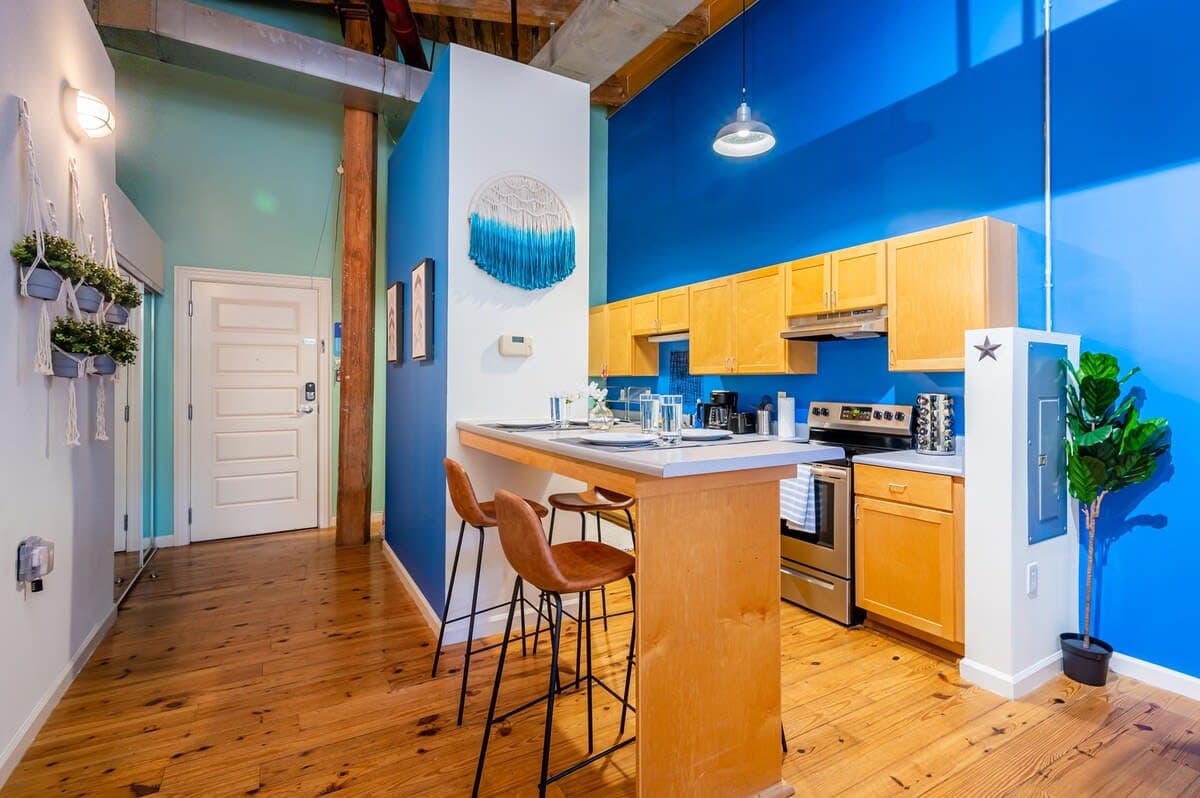
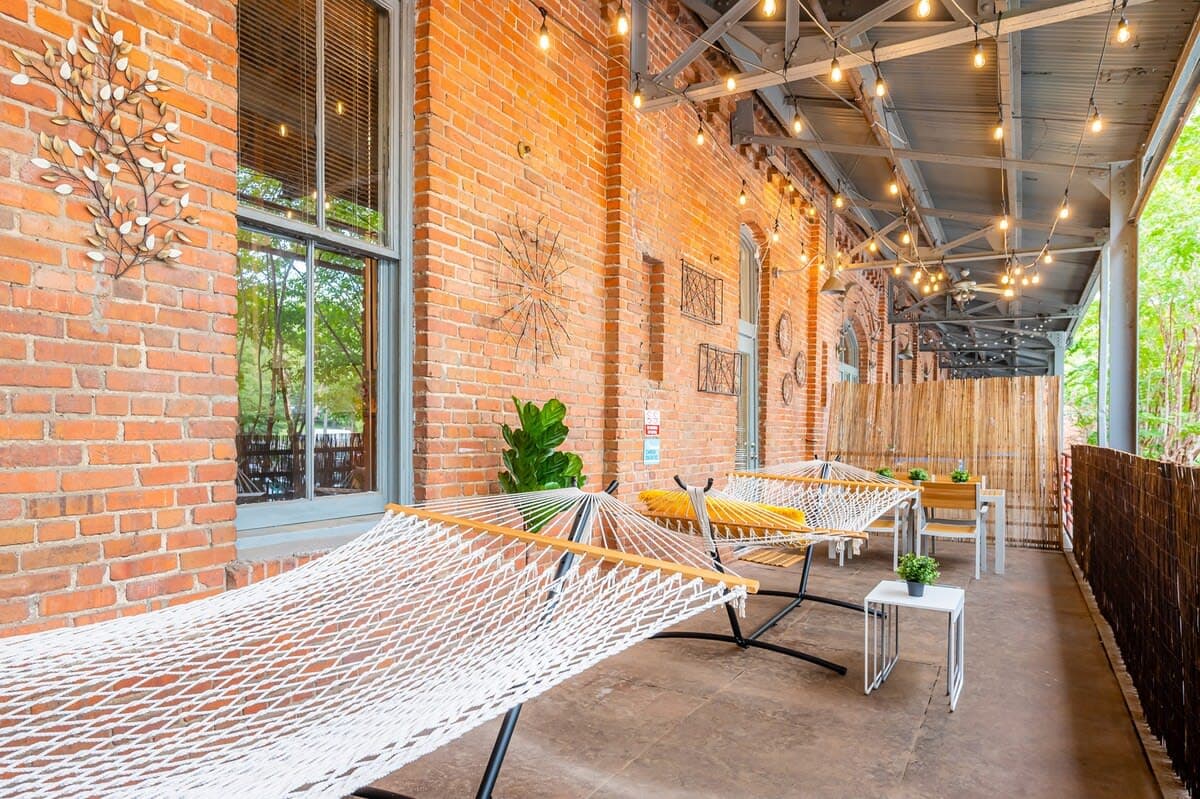
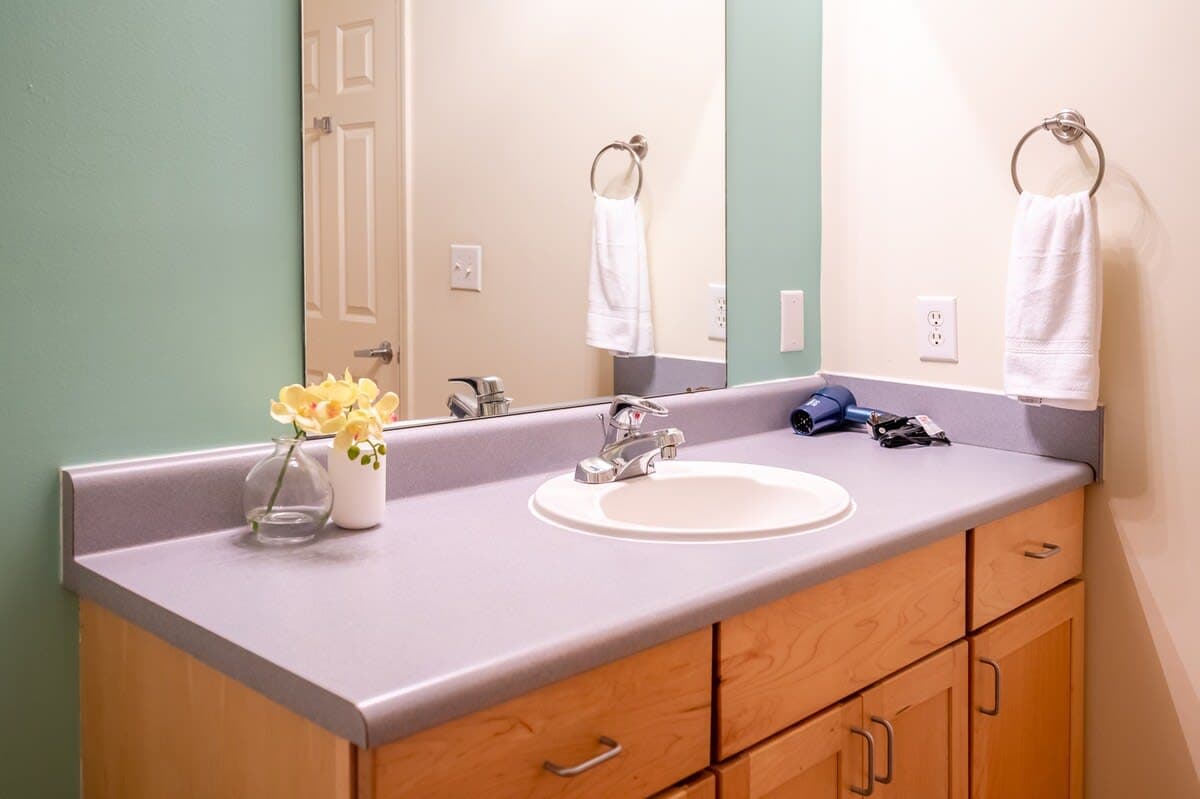
The Cooper Building · Apartment 206
100 Year-Old Historic Brick 2BR Loft -Large Patio1
West Village · downtown Durham
4.70· 879 guest reviews at The Cooper Building
- Sleeps 6
- 2 bed
- 2 bath
Nightly to monthly stays
- Free parking
- Pool
- Fitness center
- Full kitchen
- Laundry room in building
- Fast Wi-Fi
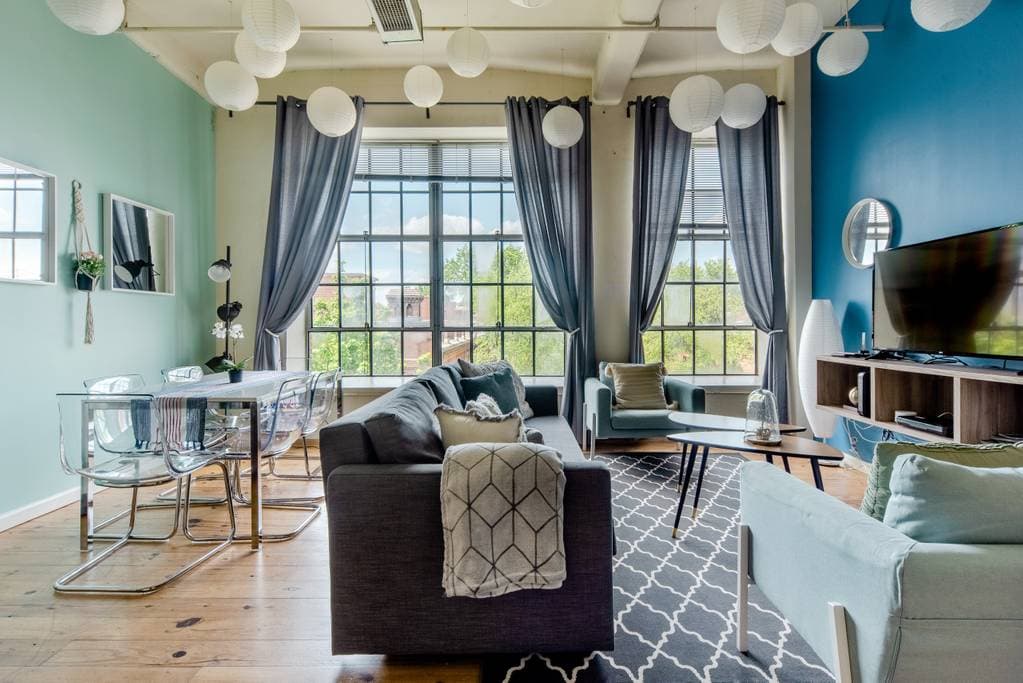
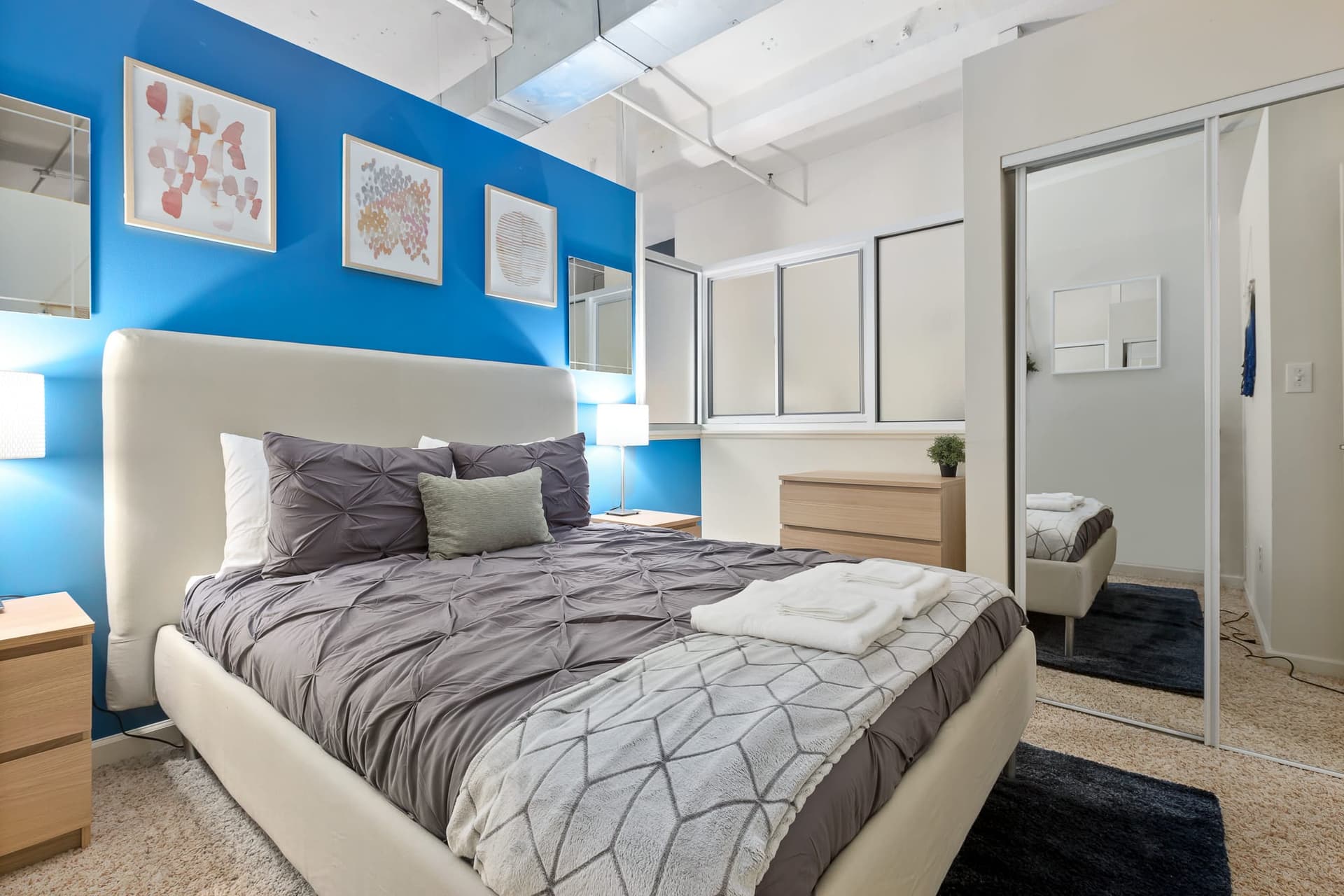
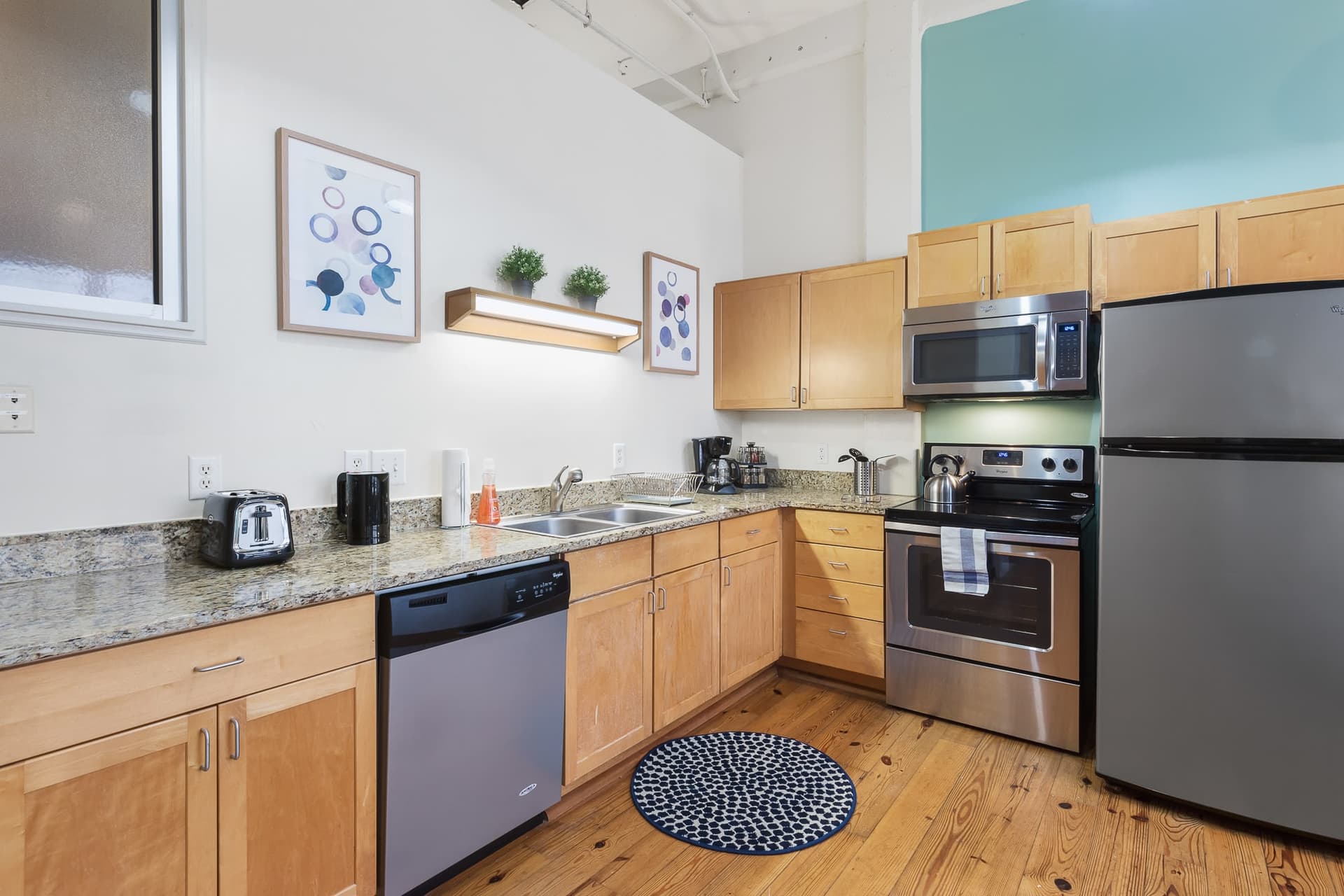
The Flowers Building · Apartment 316
100 Year-Old Historic Brick 2BR Loft High Ceiling7
West Village · downtown Durham
4.70· 1,082 guest reviews at The Flowers Building
- Sleeps 6
- 2 bed
- 1.5 bath
Nightly to monthly stays
- Free parking
- Pool
- Fitness center
- Full kitchen
- Laundry room in building
- Fast Wi-Fi
The Cooper Building · Apartment 309
100 Year Old Historic Brick 2BR Loft High Ceiling3
West Village · downtown Durham
4.70· 879 guest reviews at The Cooper Building
- Sleeps 6
- 2 bed
- 1.5 bath
Nightly to monthly stays
- Free parking
- Pool
- Fitness center
- Full kitchen
- Laundry room in building
- Fast Wi-Fi
Arriving for orientation? Tell us your dates
Give us your arrival date, how long you need and who’s coming. We’ll reply with the lofts that are open, so you can house-hunt from Durham instead of from a listing site.
Already know your dates?
Is Durham big enough for two years?
If you’re coming from New York, Chicago or Boston, Durham will feel small, and that’s the honest trade. You give up endless variety and late-night transit. You get a short commute, more space for your rent, and a class that spends its weekends together.
What surprises big-city people:
Our living in Durham pros and cons guide gives the full picture, including the downsides.